My bookreviews and fanficrecommendations. You are welcome to comment. Please read the notes in the sidebar below! BeeLikeJ@gmail.com

Sunday, September 28, 2008

BOOKbabbles: Cartoony comedy to feed your brain

Title: Heb Je In Je Hoofd Nog Ruimte Voor Waanzinnige Plannen
(Do You Have Room In Your Head For Amazing Plans?)
Author: Loesje
Genre: Politics
Publisher: A.W. Bruna
Pages: Paperback 192
Language: Dutch
Rating: 8/10

Summary: Slogans, thoughts and smart arse comments on politics, the economy, the world, love and other important stuff

More about Loesje
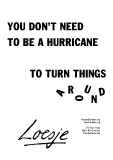
If you have ever been in the Netherlands, you probably have seen the posters signed by Loesje. Maybe she even turned up in your country;) The anonymous organisation behind that girl's name has been around since the early eighties and started plastering posters with comments on politics and society all over the Netherlands. I have been a fan from when I was a wee girl. Nowadays this activist group is also a writer's collective and regularly publishes books to get people to think. You can find international posters and information on the official website. Have some of my favorites:

STOP DREAMING ABOUT THAT KNIGHT - AND PUT ON YOUR SHINING ARMOUR


Title: The Lady and the Chocolate
Author: Edward Monkton
Genre: Poetry
Publisher: Harper Collins
Pages: Hardcover (no page numbers;)
Language: English
Rating: 9/10

Summary: An irresistible story from one of the world's most bizarre thinkers. It might just be genius. A lady and a chocolate bar have a life-changing conversation. Includes drawings:)

Snippet + author's website
"No chocolate," said the Lady. "I do not need you..." - "Ah," said the Chocolate, "but think of the rich, SILKY pleasure as I touch your lips."... Guess who wins in the end?
I love most, if not all poems by Edward Monkton. So I'm pimping his website: Interesting thoughts.

Labels: ,

Friday, April 25, 2008

Bookbabble:
In The Absence Of Men vs. Geography Club

Sometimes I notice similarities between certain books on my list. That's when I don't do a proper review, but rather choose to discuss them in relation to each other. I try to compare the times and culture in which they were created and the intent of the author.
Both these titles were recommended (given or lend) to me by different people. (Thank you Kennedy_unknown and Jelle. You know the one you made me read:)

In common: both books are about a 16 year old boy discovering his love for men. And both books are written from the first-person narrative.
The big difference: one story is situated in 1916 in France during WW I, the other in modern day USA. Guess which teen has more problems.

Synopses are partly stolen from Amazon-customers.

Title: En l'absence des hommes
Author: Philippe Besson
Genre: Fiction, gay-interest
Publisher: Editions Julliard
Pages: Paperback 176
Language: French. Read in Dutch. (Available in English: In The Absence Of Men)
Rating: 9/10

Synopsis It is 1916. Sixteen year old Vincent is aristocratic and privileged, frequenting the salons of Paris while France is at war. In that brutal summer, Vincent attracts two men: Marcel, some thirty years his senior, a celebrated writer; and Arthur, the twenty-one year old son of one of the servants, who is now a soldier at the front. Both relationships become love affairs of a kind - of the mind or of the body.

Title: Geography Club
Author: Brent Hartinger
Genre: Teen fiction, gay-interest
Publisher: Harper Collins
Pages: Paperback 226
Language: English
Rating: 6/10

Synopsis Russel is pretty sure that he's gay, but convinced he's the only one at his school. But while he's surfing a gay-teen chat room he meets a boy who not only lives in his town, but also attends his high school! They decide to meet but because of the apparent disapproval of other students (and teachers..) there's no way for them to be together inside school walls. So along with a few close friends the boys form The Geography Club. After all, no one else is going to want to join such a boring club--especially if they knew it was just a front for a gay/lesbian school group.

So how do these books compare? Beware of -mild- spoilers!

Despite having a similarly aged main character, the books are obviously written for a different audience. So the language of these stories is very different: In The Absence Of Men has long and complicated sentences, while Geography Club is a book targetted at young teens and is written in a supposedly 'hip' voice. (Someone summarized it on Amazon with: "This is Enid Blyton for the gay generation";) I must admit I had to get used to the structure of dialogue in the first, while the second is a breeze to read, but I found the language of the latter sometimes too simple, it made me feel old. And the Geography Club would get a PG rating at the most, while -of course - the French novel does have more graphic erotic scenes. But when it comes to content, what I found most shocking is that -unlike I would have expected- it's the story that's situated in modern times in which the gay characters are struggling the hardest with their surroundings.

1916-Vincent seems to have no problems with the different social classes and experiences with either the older Marcel or young soldier Arthur. There is a huge contrast between the relaxed attitude that Marcel has towards the war and the emotional and physical rollercoaster Arthur is on, while on his leave. Vincent is very aware of the differences between both his relationships: during the day he has stimulating conversations with Marcel, while he is Arthur's refuge during the night. And even though he has many questions about life in genereal, he has no issues with his sexuality. There is no fear of anyone finding out and he's not insecure about any of his feelings: this is who he is. He enjoys his life.

2003-Russel on the other hand is making quite a drama of his. It's teen angst all around, even though his life is not threatened, being gay is obviously something you can not discuss. Not even with the boy he meets! Only when they find other people who feel like outsiders it becomes easier to share their fears and feelings. But they still feel the need to hide and not tell anyone else. They even go on fake dates with girls and they practically deny each other's existence during regular school hours. It made me sad.

Of course Vincent is not discussing his sexuality with anyone outside his comfort-zone (he is not an idiot), but he's not actively hiding either. He simply accepts his feelings without worrying about them. I loved him for that.

I am aware that getting out of the closet or admitting to yourself who you are is a big thing for a lot of people, but personally I can relate much more to Vincent's than to Russel's experience. Wouldn't the world be awesome if it was like that for everyone? Maybe Geography Club can offer some form of support for teens who are struggling with their feelings, but besides telling kids that 'loners, geeks and outsiders' are people too, it doesn't really offer any comfort, in my opinion. I felt much safer while reading In The Absence Of Men, despite the war and shaky future.

Depending on what mood you go for, you can pick the one you prefer. I know the guy I'd rather spend my time with.

Labels: , ,

Bookbabble: comparing Cicero and Stephen Fry

Over 2000 years ago Cicero wrote De Oratore (55 BC). In a long letter to his brother he talks about a discussion between famous public speakers (advocates). Would I have read it, if it was written today? Probably not. Most certainly not. Because the subject of 'rethoric' is not one that appeals to me. But the thought that these rules about speaking in public still apply today makes me smile.

I'm often guilty of arrogance about the time I live in and the knowledge that is available to us these days. So occasionally an old book like this has to be read, to make me realize humans have been struggling to get it right for a long time. Today's society is not necessarily the most intelligent or best constructed system that can be. It's humbling to know the same issues have been up for discussion for a long time. Whether that applies to language or other areas of interest.

That realisation was confirmed when I moved on to the next book on my pile: Stephen Fry's The Ode Less Traveled. In this book Stephen shares his love for writing poems and offers exercises and examples to convince the reader poetry is worth the effort.

Both Stephen and Cicero emphasize the importance of structure when dealing with language. In fact they almost use the exact same words to explain this.

Comparing excerpts and babbling extensively about both authors
I've had to translate Cicero's Latin -that I read in Dutch- back to English, so bear with me...
Cicero is talking about speaking in front of an audience.
'The longest line [to use] is the one that can be spoken from beginning to end with one breath; that is nature's measurement, art has more. Aristoteles discourages use of jambees and trochees, because they will flow into our language naturally, but they put too much emphasis [on certain words] and shorten the sentences. [..] Prose has more freedom [than poetry] and is unbound by metre, but that doesn't mean it can run wild, it can only be free within its boundaries [of rules].'

Or as Stephen put it, talking about poetry:
'Adherence to metre does not militate against naturalness. Indeed it is one of the paradoxes of art that structure, form and convention liberate the artist, whereas openness and complete freedom can be seen as a kind of tyranny.
Mankind can live free in a society hemmed in by laws, but we have yet to find a historical example of mankind living free in lawless anarchy.'

He does have a way with words, doesn't he? I don't think I would have even picked up a book about poetry, if it had been written by anyone else. But I'm glad I read it and I was pleasantly surprised how well it fits with Cicero. I had struggled quite a bit with that book, even though it's very enthousiastic about language. I needed Stephen's guidance to make me appreciate the long winded explanations about the beauty and possibilities of both speaking and writing.

Rating De Oratore: 7/
In hindsight I like De Oratore. I already was aware of most of the rules about speaking in public, but Cicero was able to make clear there are many different ways to reach the goal of convincing your audience. The important thing is to be informed and know what you're talking about. If you love latin literature or are interested in the history of rethorics, this is a must read.

Rating The Ode Less Traveled: 8/10
I'll never be able to put the lessons of The Ode Less Traveled into practice. Most importantly because English isn't my first language, so my vocabulary really isn't big enough to comfortably write anything else but a journal. And even though rhyming isn't necessary, I'd get very frustrated by the inconsistency of the English language, where words that look alike don't sound alike and vice versa. I would get too annoyed trying to find the right words.

Shameless promotion of Stephen
I recommend his poetry-book to
1. those who already are aware of the genius of Stephen Fry
2. those who love writing

I have now read every book Stephen Fry ever wrote, from novels to travelreports and essays. (Okay, I have avoided the one about Cricket, because I fear he will even manage to make me love that and there is just no way I will get lured into caring about any kind of sport or physical exercise)
If you've never heard of Stephen Fry I pity you and I urge you to try one of his novels. Any one of his books will convince you he is an awesome writer and I'm sure will make you want to read more. But if you don't know where to start I vote for 'Making History', a perfect novel about what could have happened if historical events had been different.

Labels: , ,